
The 2026 AI Tool Consolidation Guide: Why Builders Are Replacing ChatGPT, Claude, and Lovable with One Unified Workspace
First-generation AI workflows force creators to use separate tools for ideation, specs, frontend generation, and database inspection. Here is why high-velocity builders are consolidating into Orbit to cut context loss and $140+/month in fragmented subscriptions.
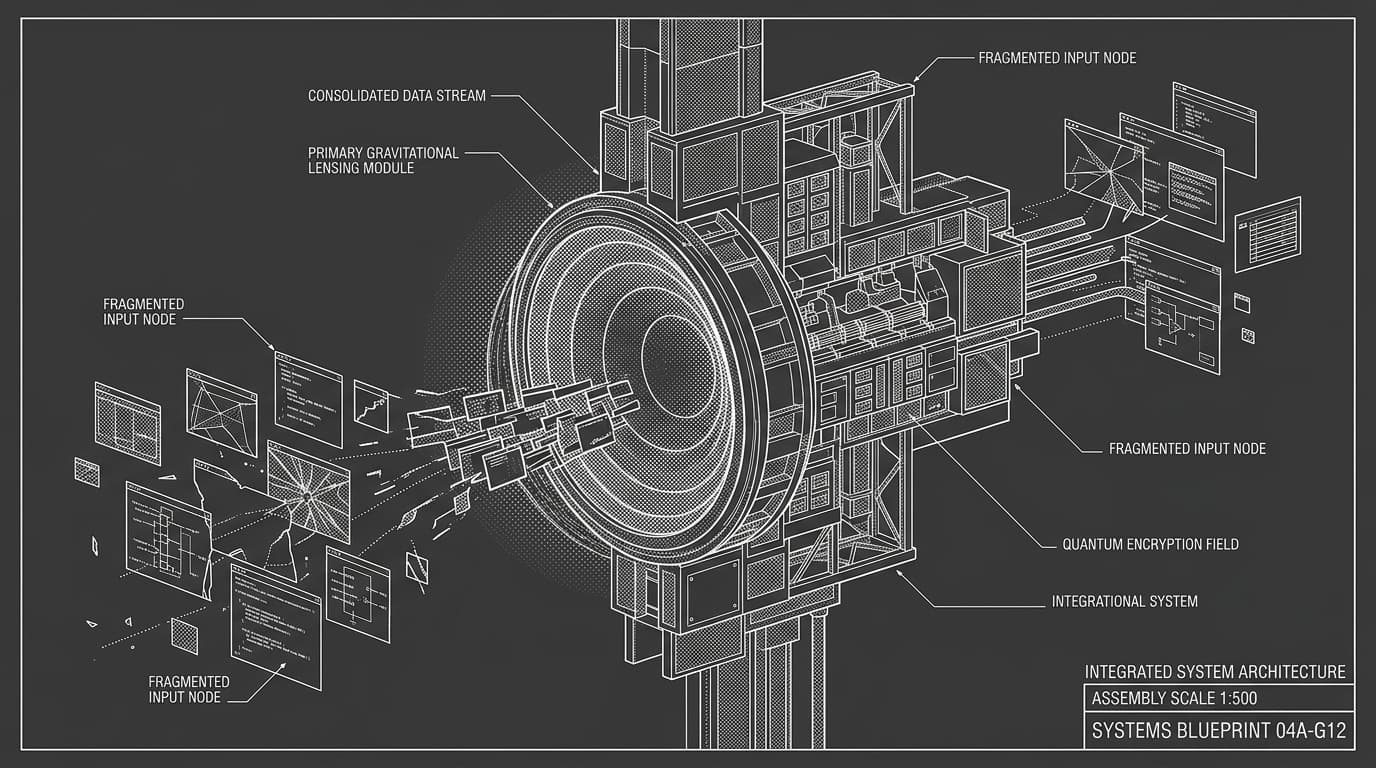
If your daily workflow involves having ChatGPT open in tab 1 for brainstorming, Claude open in tab 2 for long-context architecture analysis, Lovable or v0 open in tab 3 to mock up a quick frontend, and DBeaver or Supabase Studio in tab 4 to verify SQL tables—you are paying what engineers call the Context Fragmentation Tax.
You are spending $120 to $180 every month across multiple isolated subscriptions. But the financial cost is nothing compared to the cognitive friction: you spend hours every week acting as a human copy-paste router between disconnected browser windows that share zero memory.
The era of point-solution AI chatbots is closing. In 2026, high-velocity creators, solo developers, and technical teams are shifting to unified autonomous workspaces like Orbit.
Here is why this shift is happening, how the math stacks up, and how modern builders are cutting the chaos.
1. The "Copy-Paste Tax": Anatomy of a Broken Workflow
Let’s trace the journey of building a production feature or launching a new product using the standard fragmented stack:
Step 1: Ideation (ChatGPT / Perplexity) — You research market comps and draft user stories. You get generic text, copy the summary, and save it to an external doc.
Step 2: Schema Design (Claude) — You paste the user stories into Claude to write your PostgreSQL schema and API types. Claude returns clean SQL, but has no connection to your real database to verify whether table names collide or constraints work.
Step 3: Frontend Prototyping (Lovable / v0) — You paste those types into a prompt-to-app generator. You get a sleek UI in an in-browser sandbox. But when you ask it to hook into your live Supabase instance with authenticated role-based access, the code breaks or silently falls back to static JSON dummy data.
Step 4: SQL & Data Verification (DBeaver / TablePlus) — You open your database GUI to write and test the migration queries manually because the AI builder cannot safely read your live schema.
Step 5: Business Operations (Shopify / Stripe / Retool) — Once live, you switch to separate dashboards to check conversion and inventory, manually exporting CSVs to paste back into a chatbot to analyze churn.
Every transition between these windows drops context, introduces hallucinations, and burns engineering hours.
Interactive AI Stack Consolidation Calculator
Select the disconnected tools in your current workflow to calculate your net annual subscription savings and recovered context-switching hours with Orbit.
$80 per month recurring savings
2. The 3 Inherent Flaws of Single-Purpose AI Tools
1. Chatbots Have No Execution Runtime
ChatGPT and Claude are conversational reasoning engines. They can generate functional code blocks, but they cannot run them, compile packages, check terminal output (stderr), or diagnose runtime crashes. You are forced to be the compiler, the terminal, and the debugger.
2. Rapid App Builders Have No Ground Truth
Browser-based generators like Lovable and Bolt rely on ephemeral client-side environments and synthetic mock data. The moment an application requires live PostgreSQL relational queries, complex foreign keys, or real file persistence, they struggle. They lack direct, verified integration with your live databases and production sources.
3. Business Dashboards Have No Native Intelligence
Traditional admin consoles (Shopify, Retool, Stripe) display metrics, but cannot take natural language action. If your inventory runs out of a top-selling SKU, your dashboard shows an alert, but it cannot draft a supplier purchase order, recalculate price elasticity, and rebalance your collection page from a single sentence.
3. The Modern Solution: The 4-Pillar Unified Workspace
A true autonomous workspace does not merely bolt a chat box next to an iframe. It unifies Reasoning, Ground Truth Data, Full-Stack Execution, and Live Operations into one continuous operational loop.
Comparing multi-tool subscriptions against a unified workspace architecture
| Capability | Fragmented Toolchain (ChatGPT + Claude + Lovable + Retool) | Orbit Unified Workspace | Impact on Shipping Speed |
|---|---|---|---|
| Monthly Cost | $110 – $180+/month across 4 separate bills | Single unified workspace plan | Immediate software spend reduction |
| Project Memory | 0% (Context resets across tabs and sessions) | Persistent continuous workspace memory | No repeated prompting or re-explaining |
| Database Grounding | Manual SQL exports or copy-pasted CSV dumps | Direct Postgres, Supabase, and document Sources | Zero schema hallucinations, live verified queries |
| Code Output Targets | Web-only React components (Tailwind HTML / Vite) | 4 Targets: Next.js, Expo React Native, Vite, HTML | Build both web apps AND native iOS/Android apps |
| Execution Model | Ephemeral browser sandbox or local laptop setup | Persistent, isolated cloud execution environment | Real package installation and server-side state |
| Operational Intelligence | Manual clicking through Shopify, Stripe, and BI tabs | Conversational e-com, catalog sync & store ops | Automate POs, inventory, and churn via prompt |
Pillar 1: Cited Research & Reasoning
Instead of relying on frozen model weights that hallucinate deprecated packages, the workspace queries the live web, reads source documentation, and compiles cited blueprints before touching code.
Pillar 2: Sources & Ground Truth Engine
Instead of guessing database schemas, you attach PostgreSQL, Supabase, Neon, or document stores directly as Sources. The engine inspects real constraints, validates joins, and executes verified read queries to ground everything in production reality.
Pillar 3: Multi-Target Code Generation (Web + Native Mobile)
Rather than trapping you in browser-only web mockups, Orbit compiles typed codebases across 4 explicit targets: Next.js App Router with Supabase Auth and PostgreSQL, Expo React Native for cross-platform iOS and Android mobile apps, Vite React with TypeScript and Tailwind CSS, and Semantic HTML5/CSS3 for ultra-fast landing pages.
Pillar 4: Autonomous Conversational Operations
Whether managing a SaaS platform or an e-commerce brand, you can query customer metrics, restock inventory, issue discount codes, and analyze business telemetry through a single conversational prompt.
4. Real-World Workflows: What You Can Actually Build
Workflow A: Live PostgreSQL Database → Production Analytics App (4 Minutes)
The Old Way: Export CSV → Clean in Excel → Build views in Retool or hand-code a Next.js frontend with Prisma ORM (2–3 days). The Unified Workspace Way: "Connect our read-replica Postgres database via Sources. Analyze the subscriptions and customer_activity tables, identify the primary churn indicators, and build a full-stack Next.js dashboard with interactive cohort retention charts." Orbit inspects the live schema, validates the SQL queries against ground truth, and writes and runs the Next.js application with zero dummy data.
Workflow B: Idea → Native iOS & Android Mobile App
The Old Way: Lovable and v0 are web-only. You must hire an app developer or spend days configuring React Native, CocoaPods, Android Studio, and navigation libraries manually. The Unified Workspace Way: "Build a native cross-platform expense logging app with biometric lock, local SQLite storage, and camera receipt scanning using Expo React Native." Orbit scaffolds an Expo project with typed TypeScript files, offline caches, and native mobile gestures ready to test directly on your phone.
Workflow C: Autonomous Store & Inventory Ops
The Old Way: Manually cross-reference Shopify inventory with Google Sheets, calculate run-rates, generate supplier emails, and set discount codes across 3 admin panels. The Unified Workspace Way: "Scan our last 60 days of orders. Identify any SKUs with less than 14 days of inventory remaining, draft a supplier PO, and create a 10% flash sale discount for customers who haven't ordered in 90 days." The conversational business engine handles the analytics, creates the discount rule, and stages the catalog updates without leaving the workspace.
5. Summary: Stop Being the Glue Between Your Tools
In 2023 and 2024, paying for a fragmented toolchain was necessary because AI tooling was brand new and hyper-specialized. In 2026, forcing yourself to be the manual human bridge between ChatGPT, Claude, and Lovable is a tax on your momentum.
The future of software development and digital business is not another disconnected chat window. It is an autonomous workspace where thinking, connecting to ground truth data, building multi-platform apps, and running operations happen in one fluid motion.
[ CROSS-REFERENCES · EXPLORE ORBIT CAPABILITIES ]
Frequently Asked Questions
- [Q]Can Orbit completely replace ChatGPT and Claude?
- Yes. Orbit combines frontier LLM reasoning with live web search, long-context document analysis, and immediate code execution in one unified workspace, eliminating the need to copy-paste prompts between chat tabs.
- [Q]How is Orbit different from Lovable and v0?
- Lovable and v0 generate browser-only prototypes with synthetic mock data. Orbit builds full-stack applications across 4 targets (including Next.js with Supabase backend and native Expo mobile apps) and connects directly to live enterprise databases via Sources.
- [Q]What is the Context Fragmentation Tax?
- The Context Fragmentation Tax refers to the 40%+ loss of project context, hallucinated APIs, and hours wasted when developers manually copy-paste requirements between disconnected AI chat windows, code generators, and database tools.
Build with Orbit AI Developer Workspace
Connect live databases, generate native Expo mobile codebases, and eliminate fragmented subscriptions inside one continuous environment.